A practice of
attention.
Belarusian photographer working at the intersection of documentary, ritual and memory.
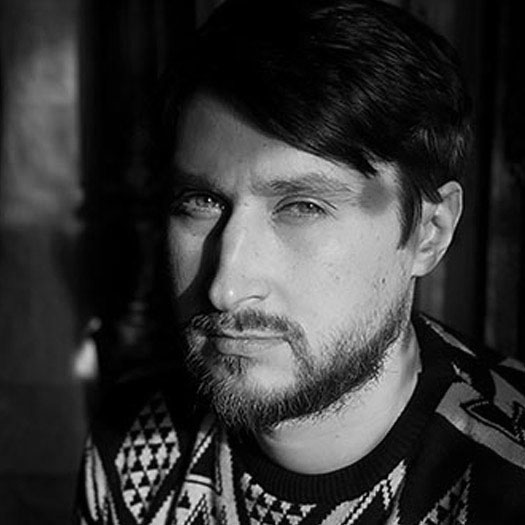
I photograph what is about to disappear — a gesture, a wallpaper, a way of believing.
Andrei Liankevich is a Belarusian photographer, born in 1981 in Hrodna and based in Minsk. For more than two decades his work has traced the slow erosion of Soviet memory and the quiet survival of folk ritual across Eastern Europe.
He studied at the World Press Photo seminar in Yerevan (2004–05), Focus on Monferrato in Tuscany (2007), and the French Pour l’instant programme (2008), for which he produced Modern Family Institutions. Between 2009 and 2010 he photographed the Belarusian diaspora in Poland under the Gaude Polonia fellowship.
Liankevich worked with the European Press Photo Agency (2005–2010) and the Anzenberger Agency (2007–2012), and in 2008 co-founded the SPUTNIK photographers’ collective. His images have appeared in The New York Times, Le Figaro, Newsweek, Die Zeit, Der Spiegel, GEO, Vanity Fair, Reader’s Digest and the International Herald Tribune.
His work has been shown in more than sixty exhibitions across Europe, Asia and the United States — among them She Has a Female Name at the Museum of Modern Art, Vienna, and Zachęta Gallery, Warsaw, and Unknown Country at the Third Month of European Photography, Uferhallen, Berlin. Alongside his own practice he teaches photojournalism at the European Humanities University in Vilnius (since 2004), curates the annual Month of Photography in Minsk (founded 2014), and organised the World Press Photo exhibition in Minsk in 2012 and 2013.
- 2004 Begins teaching Photojournalism at the European Humanities University, Vilnius.
- 2004–05 Studies at the World Press Photo seminar, Yerevan (Armenia).
- 2007 Focus on Monferrato master class, Tuscany. Joins Anzenberger Agency (until 2012).
- 2008 First catalogue published. Co-founds the SPUTNIK photographers' collective.
- 2009 Humanity Photo Awards prize for Pagan traditions in Belarus; Magnum Expression Award finalist.
- 2010 Pagan — first book on Belarusian pagan rites — published. Six prizes at Belarus Press Photo; OSCE photo contest winner.
- 2012 Named one of the 15 most influential Belarusian artists of the 2000s. Grand Prix, Kaunas Photo Star.
- 2013 Edits BY NOW, the first survey of young Belarusian photography (Kehrer Verlag).
- 2014 Founds Month of Photography in Minsk — now an annual festival across Minsk, Brest and Hrodna.
- 2015–16 Art director of TCEH cultural space, Minsk.
- 2016 Grand Prix at Salon d'Automne, Minsk, for collages from Goodbye, Motherland.
- 2017 Grand Prix at Warsaw Photo Days for Goodbye, Motherland.
- 2018 Time Space Existence — collateral exhibition, 16th Venice Biennale of Architecture.
- 2020 Winner, Gender Photography Competition, London — Traditional Interiors.